Case Studies
The Card That Spoke Before She Did: A Founder's Story
When architect Priya Mehra handed her card to a potential client in Mumbai, the texture of the paper said everything her words had not yet had the chance to.
A Room Full of Portfolios
The conference room on the twenty-second floor of a Bandra Kurla Complex tower had seen a hundred pitches. Priya Mehra knew this the moment she walked in. The long table held laptops, printed decks, a glass of water for each chair. Her competitors, two established Mumbai firms and one well-funded Delhi studio, had arrived with glossy folders and branded pens. Priya had arrived with her work, her words, and a small leather card holder she had carried since the day Chhapai delivered her first order.
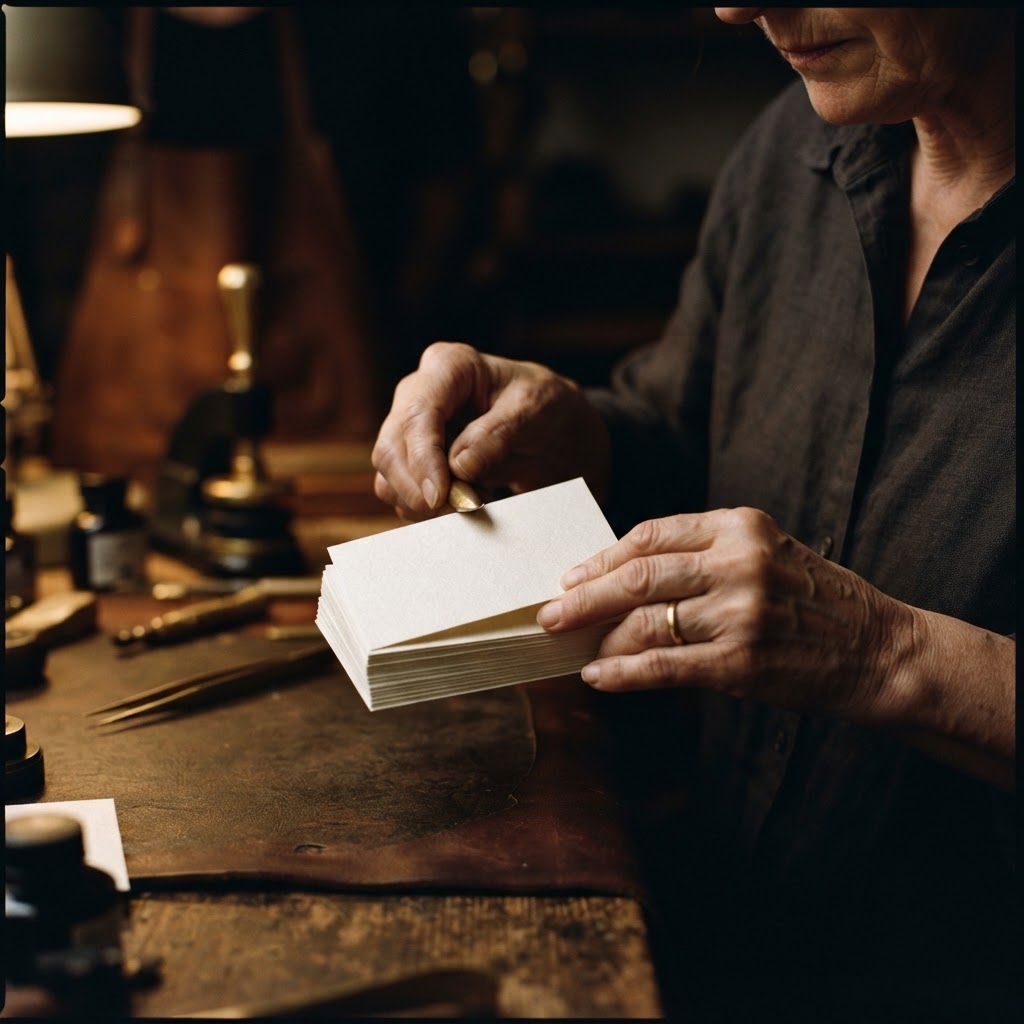
The introductions moved quickly. Each principal slid a card across the table with the practiced ease of someone who had done it a thousand times. Priya placed hers last. The prospective client, a hospitality group commissioning a heritage hotel restoration in Udaipur, picked it up. He did not set it down again for a full minute. He turned it over. He ran his thumb across the face of it. He said nothing immediately, which in that room, at that moment, was everything.
Later, after the pitch had concluded and Priya's studio, Mehra Atelier, had been shortlisted, the client's director of development caught her in the corridor. "Your card," she said, "felt like it had already been somewhere."
What a Card Must Carry
Priya had founded Mehra Atelier in 2019 after a decade with two of India's most respected architecture firms. The work her studio pursued was specific: the restoration and adaptive reuse of heritage properties, spaces that had accumulated meaning over generations and required a particular kind of listening before any drawing began. She worked slowly, deliberately, with small teams and long relationships. Her clients were developers with patience and hoteliers with taste, people who understood that the first gesture of any project set its entire tone.
Her previous cards had been serviceable. Matte laminate, well-typeset, the studio name in a clean serif. They communicated competence. But competence, Priya had come to understand, was the lowest bar in the rooms she was entering. What she needed was a card that communicated sensibility. That suggested she had thought about material the way she thought about a carved sandstone jharokha or a teak ceiling that had darkened beautifully with a century of smoke and oil. She needed a card that felt like it belonged to someone who understood that objects carry history.
"I wanted someone to hold it and feel, without knowing why, that the person who made this decision was someone who paid attention to the right things."
A colleague in the hospitality design world had mentioned Chhapai. Not in passing, but with the kind of deliberate recommendation that people give when they know the difference between a vendor and an atelier. Priya made the trip from Mumbai to Jaipur on a Friday afternoon in late autumn, when the city's light is the colour of old brass and the air carries the faint sweetness of marigold garlands from the flower market on MI Road.
The Paper Itself
What Old Mill Stucco Is, and Where It Begins
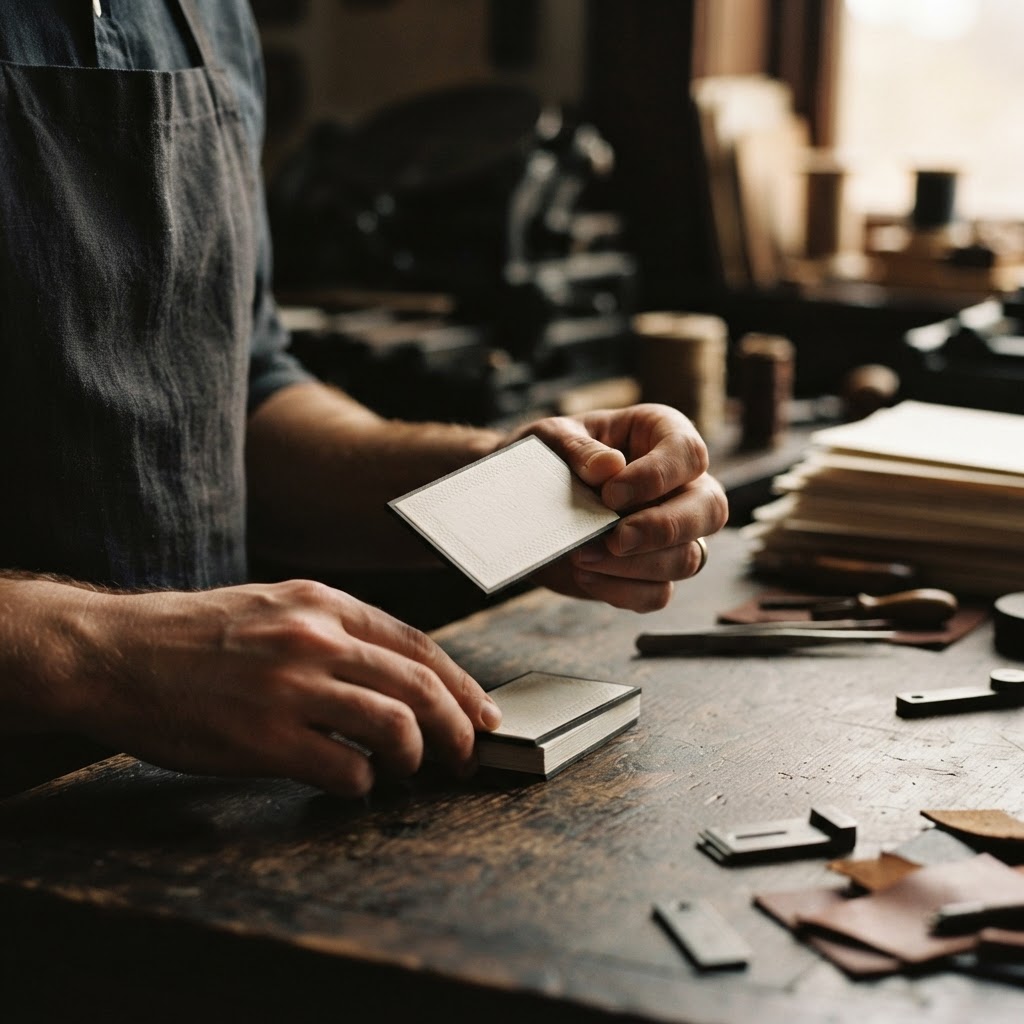
At Chhapai's studio in Jaipur, the conversation about paper always precedes the conversation about printing. This is not a formality. It is the philosophy of the place made visible. When Priya sat down with the team and the sample books came out, Old Mill Stucco was the paper she returned to three times before committing. She could not immediately say why. She only knew that of everything she touched that afternoon, this was the one that felt like it had already decided something.
Old Mill Stucco is made by Fedrigoni, the storied Italian paper house whose mills have been producing fine papers since the nineteenth century. The specific stock comes from their German operation, and it is built from pulp fibre in a way that gives it both substance and softness at once. It is not a cotton paper, and it is not a coated stock. It occupies a more interesting territory between the two, a textured finish that reads as artisanal without announcing itself, the way a beautifully aged plaster wall carries texture without demanding that you notice it.
Hold a sheet of Old Mill Stucco to a raking light and you see the surface move. There is a gentle topography to it, fine and even, like the surface of handmade paper that has been pressed but not flattened into submission. Run a fingernail lightly across it and there is a faint, satisfying resistance, what paper people call tooth. It is not rough. It is present. It asks to be touched.
The Weight of Intention
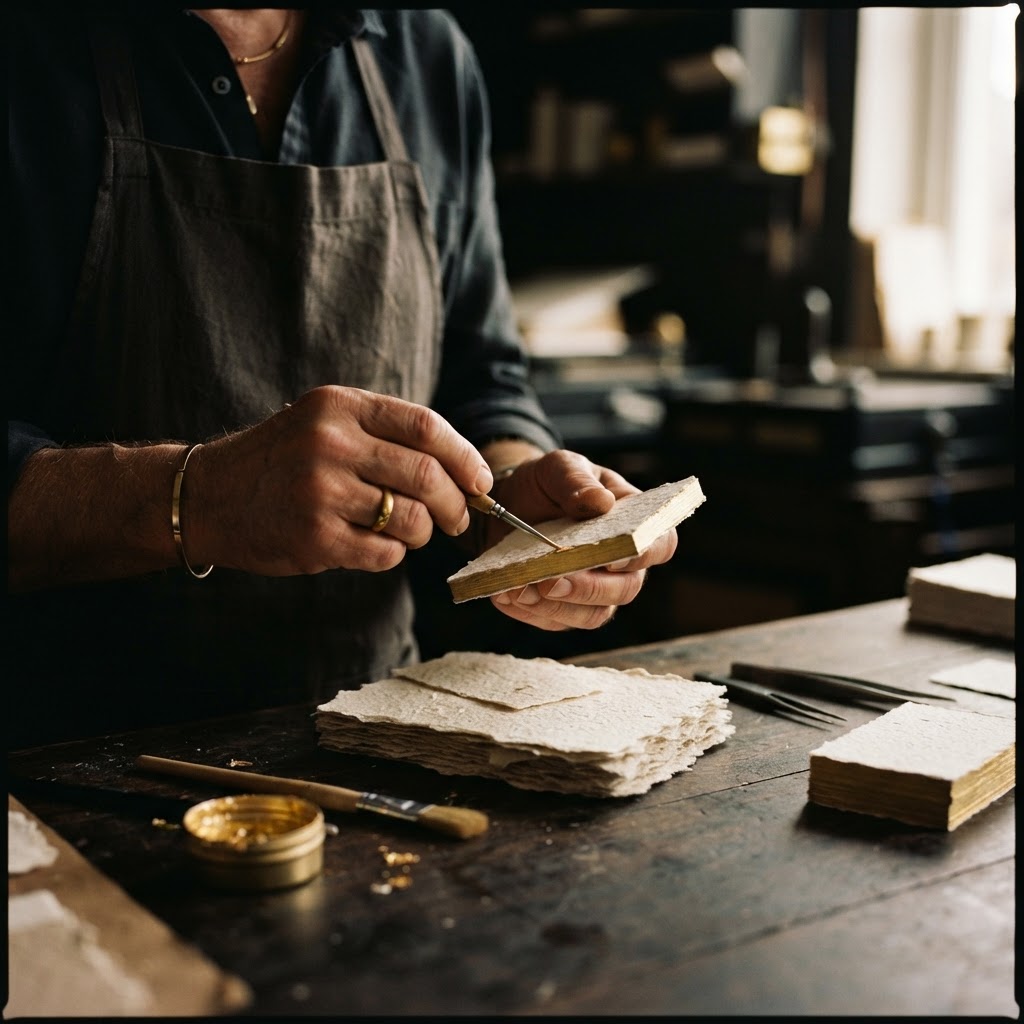
At Chhapai, the selection of a paper stock is treated as an architectural decision. The team works with clients to understand not only what the card must say in type, but what it must say in hand. Old Mill Stucco arrives from Fedrigoni in sheets, and the handling of it through the studio requires a calibration of humidity, pressure, and temperature that the team has refined across nearly two decades of working with European fine papers in the particular climate of Rajasthan.
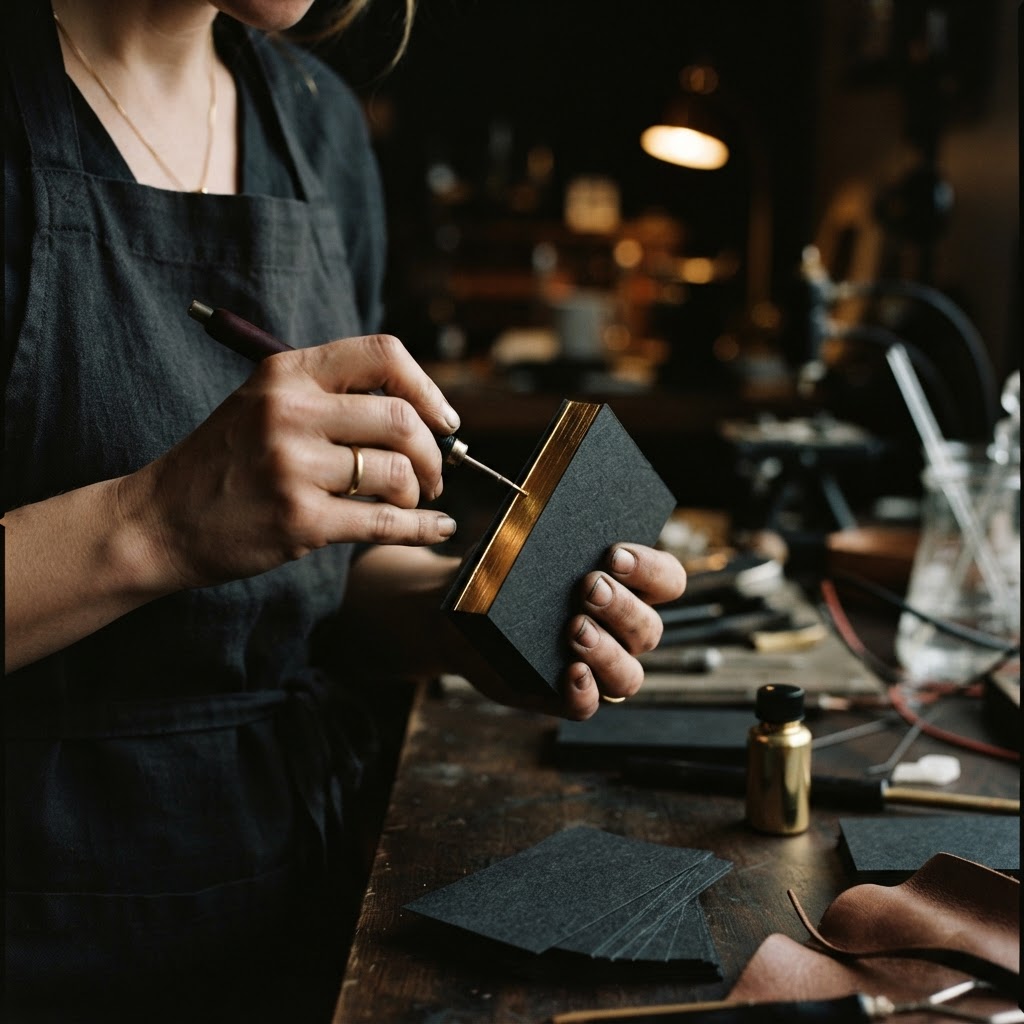
For Priya's cards, the studio recommended letterpress printing, pressing the type into the surface of the stock so that each character sits in a slight depression you can feel as your thumb crosses the face of the card. The ink chosen was a deep charcoal, one shade removed from black, which on the stucco finish appeared not merely printed but embedded, as though it had always been part of the fibre. The reverse of the card carried a single architectural detail, a line drawing of a jharokha in hairline weight, ghosted in a tone barely removed from the paper itself. Visible only in certain lights. Present only to those who looked.
The quantity was three hundred cards. The production took eleven working days. When the box arrived at Priya's studio in a Bandra apartment building, she opened it at her desk on a Tuesday morning and held one card for a long time before she put it in her card holder.
What Changed in the Rooms That Followed
The Udaipur project was commissioned eight weeks after the Bandra Kurla pitch. Priya does not claim the card won the project. Architecture is won on drawings, on relationships, on the quality of thought brought to the earliest conversations. But she will say, precisely and without embellishment, that the card opened a particular kind of conversation that her previous cards had not.
Three times in the months following, a prospective client mentioned the card before the work. A resort developer in Goa turned it over and asked where it had been printed, and that question led to a conversation about materiality and craft that lasted an hour and became the foundation of a brief for a seventy-room property. A Mumbai-based art collector introduced Priya to a colleague with the words, "She is the architect with the card that weighs something." The collector had not been a client at that point. She became one.
"When someone holds your card and asks where it came from, they are already in the right conversation. They are already asking about provenance, about care, about where things are made and by whom. Those are exactly the questions my best clients ask about buildings."
There is a particular kind of professional confidence that comes not from external validation but from the alignment of one's materials with one's values. Priya describes it with characteristic understatement. She says that before the Chhapai cards, she sometimes felt a small, wordless hesitation before handing a card over in an important room. After, she did not. The card had already thought about what mattered. She simply let it speak first.
The Quietest Form of Brand Building
There is a tendency in contemporary professional culture to measure brand investment by reach, by impressions, by the scale of the audience a message can find. Priya Mehra's story suggests a different mathematics. Three hundred cards, eleven days in production, one Jaipur atelier, paper made from pulp fibre in a German Fedrigoni mill with a textured finish that catches light in a particular way. And from that, rooms opened that had not opened before, conversations deepened before they might otherwise have, a studio's sensibility made tangible in an object small enough to fit in a shirt pocket.
At Chhapai, we have believed since 2006 that the business card is not a formality. It is the first object your client owns that belongs to your world. If it is made with the same attention you bring to your work, it carries that attention forward into rooms you will never enter, into drawers that hold only the things worth keeping, into conversations that begin with the simple, significant act of someone picking up a card and not wanting to put it down.
Priya's cards are on their second reorder now. She has changed nothing about the specification. Some things, when they are right, do not require revision.